Customize your vest or jacket exactly how you like it — material, style, fit and features. Answer a few quick questions and our team reaches out to build it with you.
Request Received
Thanks — your custom build request is in. A First MFG specialist will contact you within one business day to finalize the details.
What type of custom product are you interested in?
What style of vest / jacket do you want?
What type of material do you want?
Do you want a standard fit or custom measurements?
What features do you want? (Select all that apply)
Best way and time to contact you?
Any special details about your custom build?
Where should we reach you?
All fields required. No payment now — this is a request; our team confirms pricing & details before anything is built.
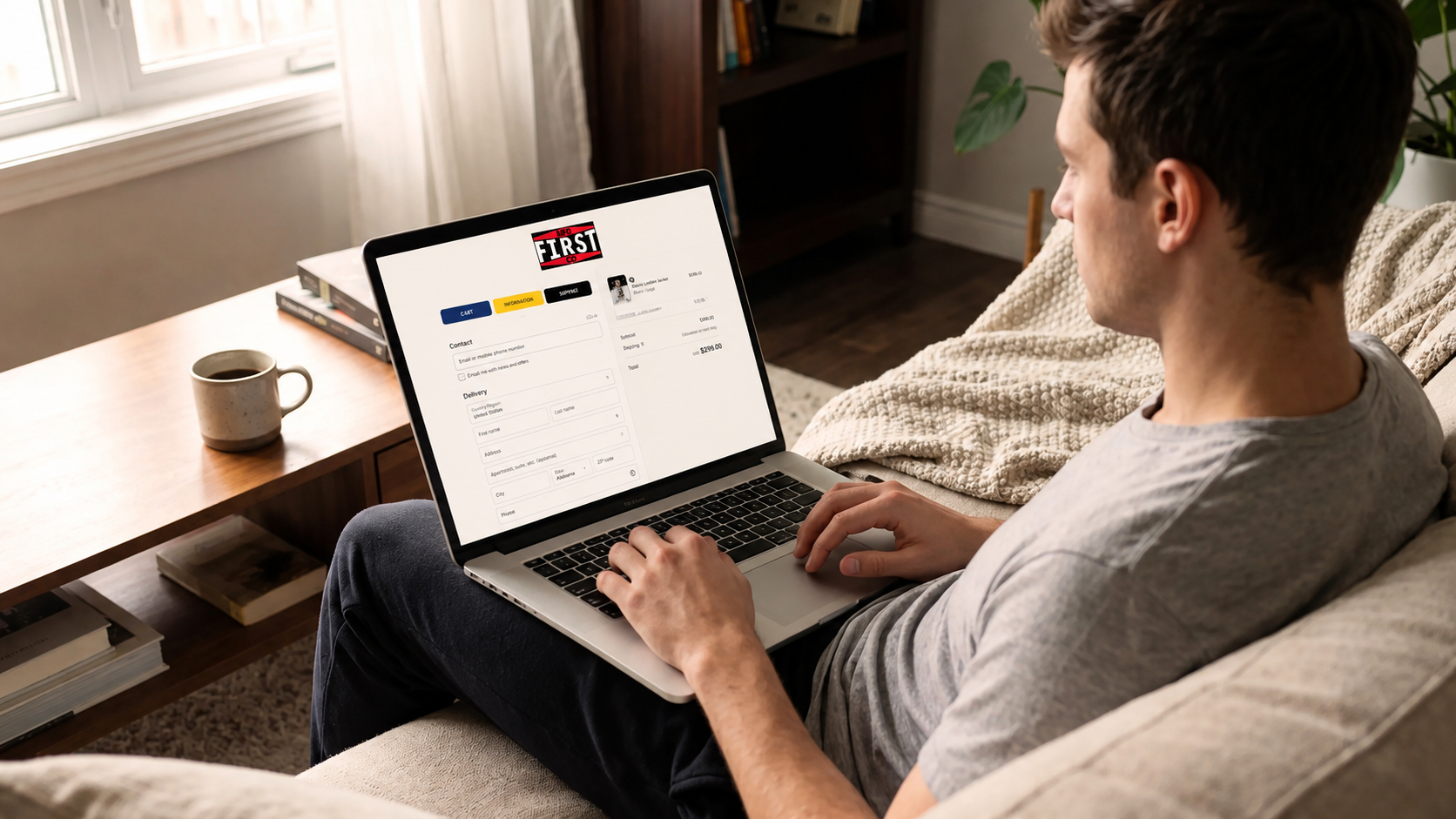
1. Placement de commande/Consultation
Passez votre commande avec les personnalisations essentielles et partagez votre vision du design avec nous, afin que nous puissions comprendre clairement ce que vous souhaitez que nous créions pour vous.
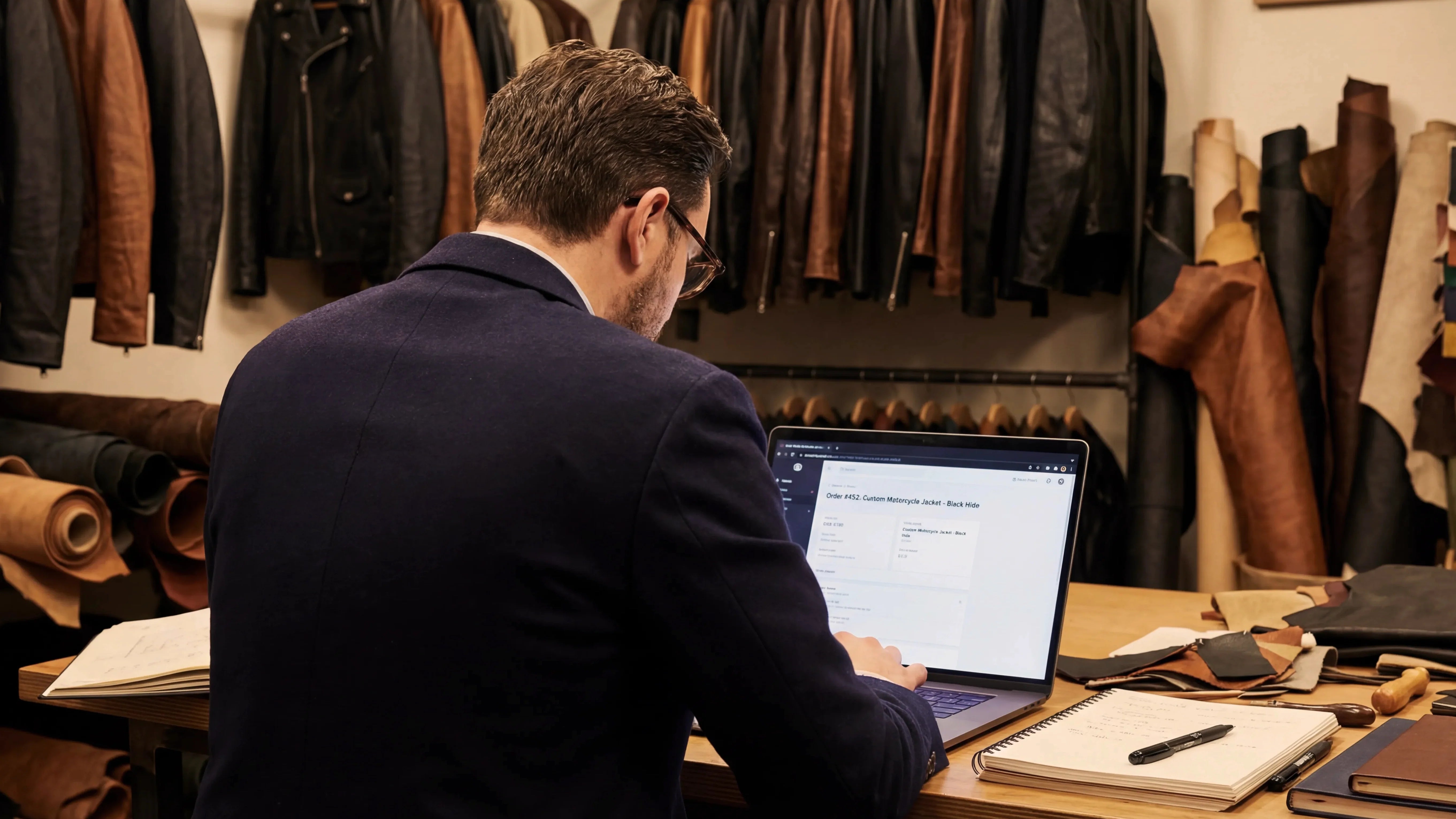
2. Consultation et révision de la conception
Un consultant en design dédié vous est assigné, il examine attentivement votre commande, suggère des améliorations ou des ajouts judicieux, et confirme chaque détail avec vous avant de poursuivre.
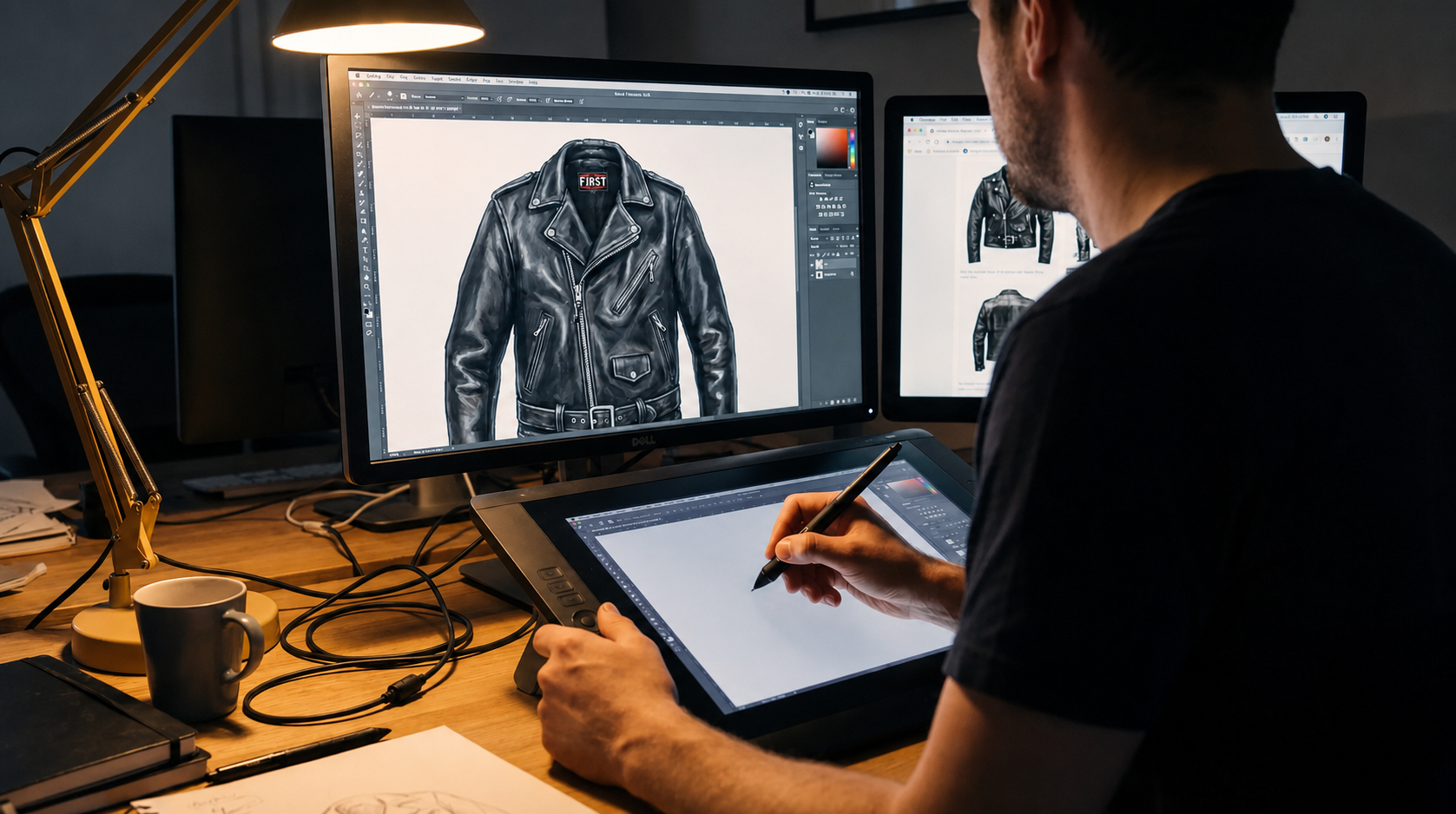
3. Création d'illustrations
Nous créons une visualisation hyperréaliste de votre design et la partageons avec vous, afin que vous puissiez l'examiner, suggérer des modifications et avoir confiance avant le début de la production.
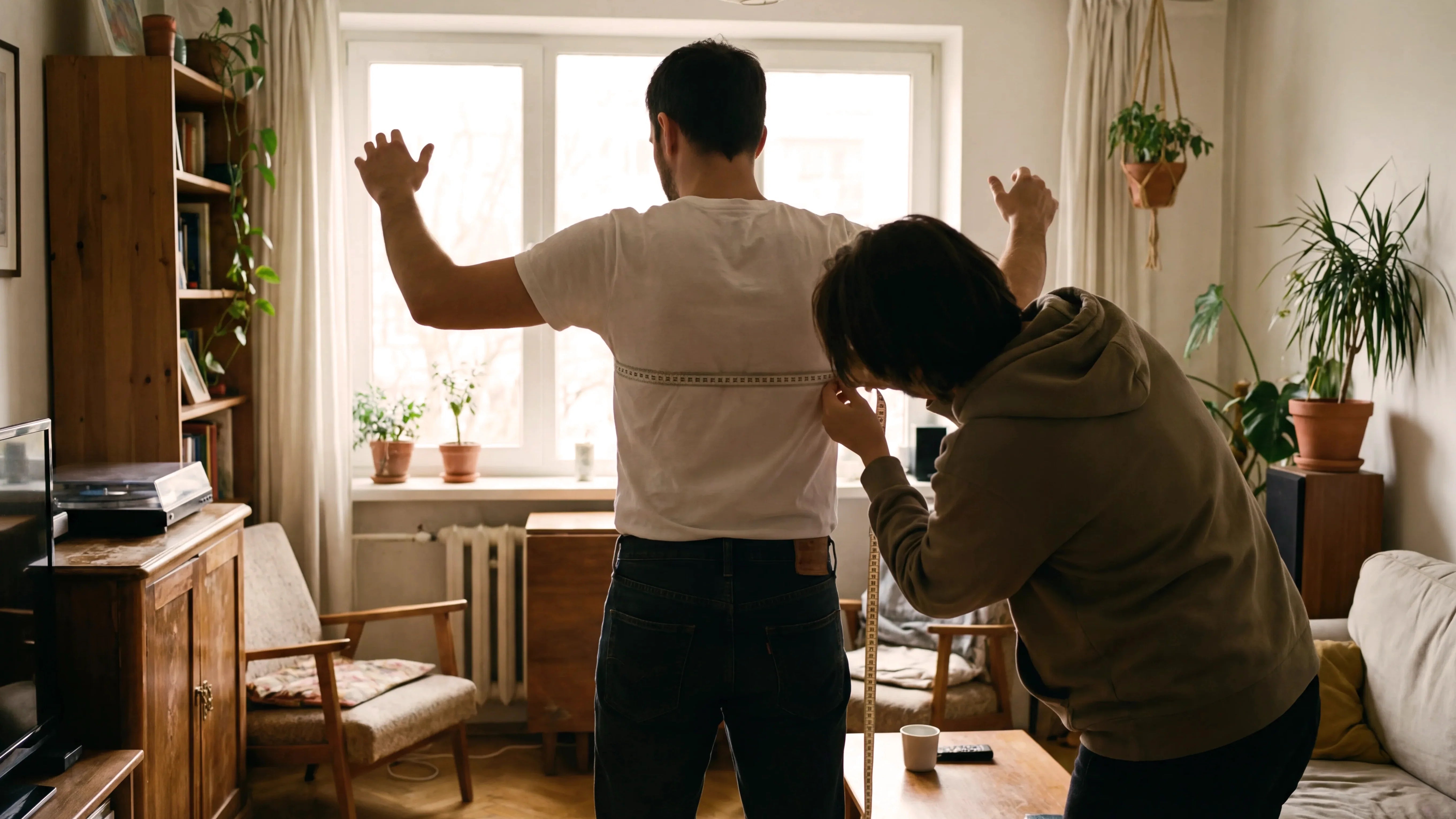
4. Mesures et vérification
Votre conseiller vous guide tout au long du processus de mesure avec des instructions simples et des guides vidéo, garantissant la précision et vérifiant soigneusement chaque détail avant de passer à la production.
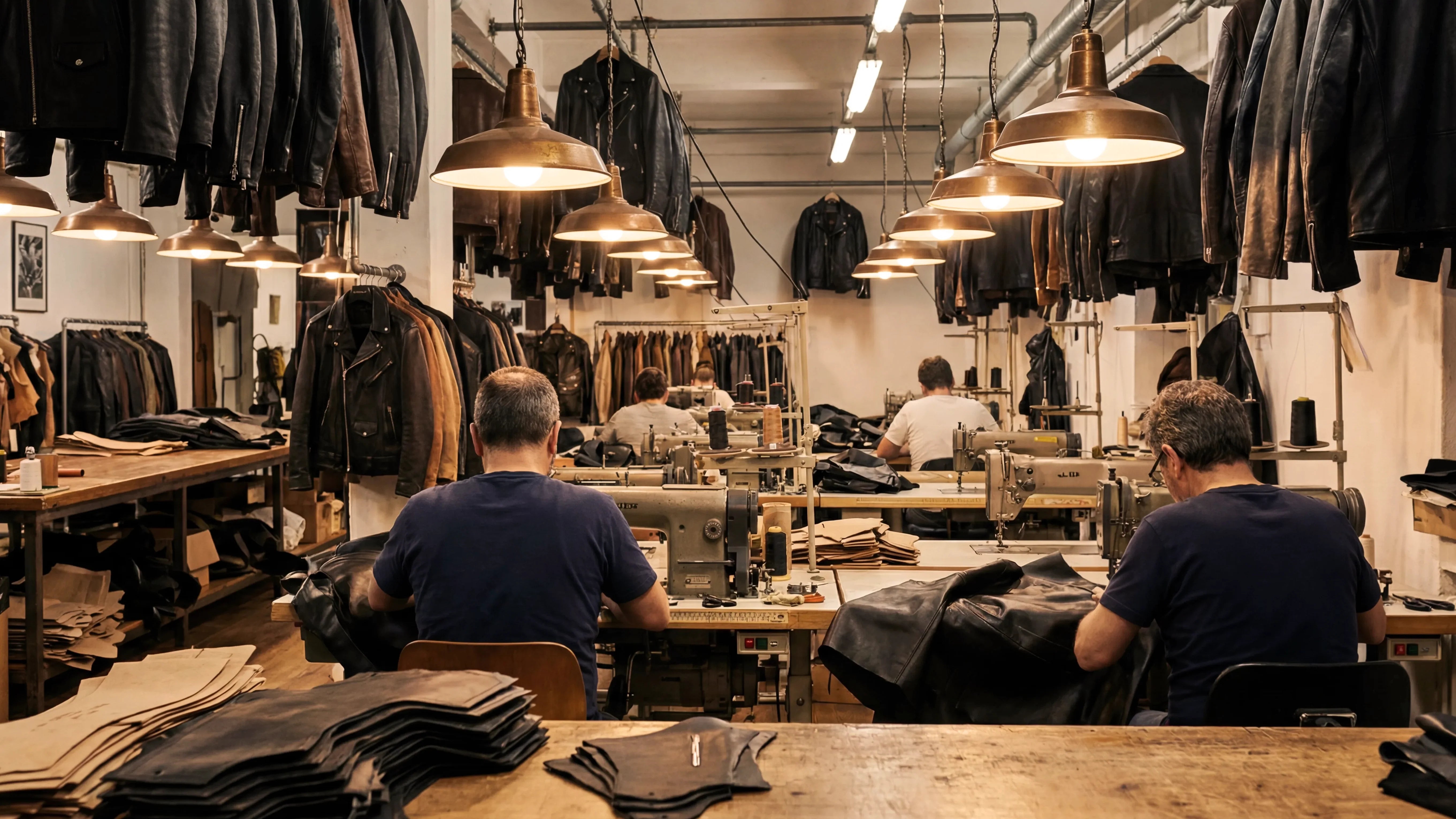
5. Production
Une fois que tout est approuvé, votre blouson en cuir personnalisé passe en production, où un artisan qualifié donne vie à votre design avec précision, soin et une grande attention aux détails.
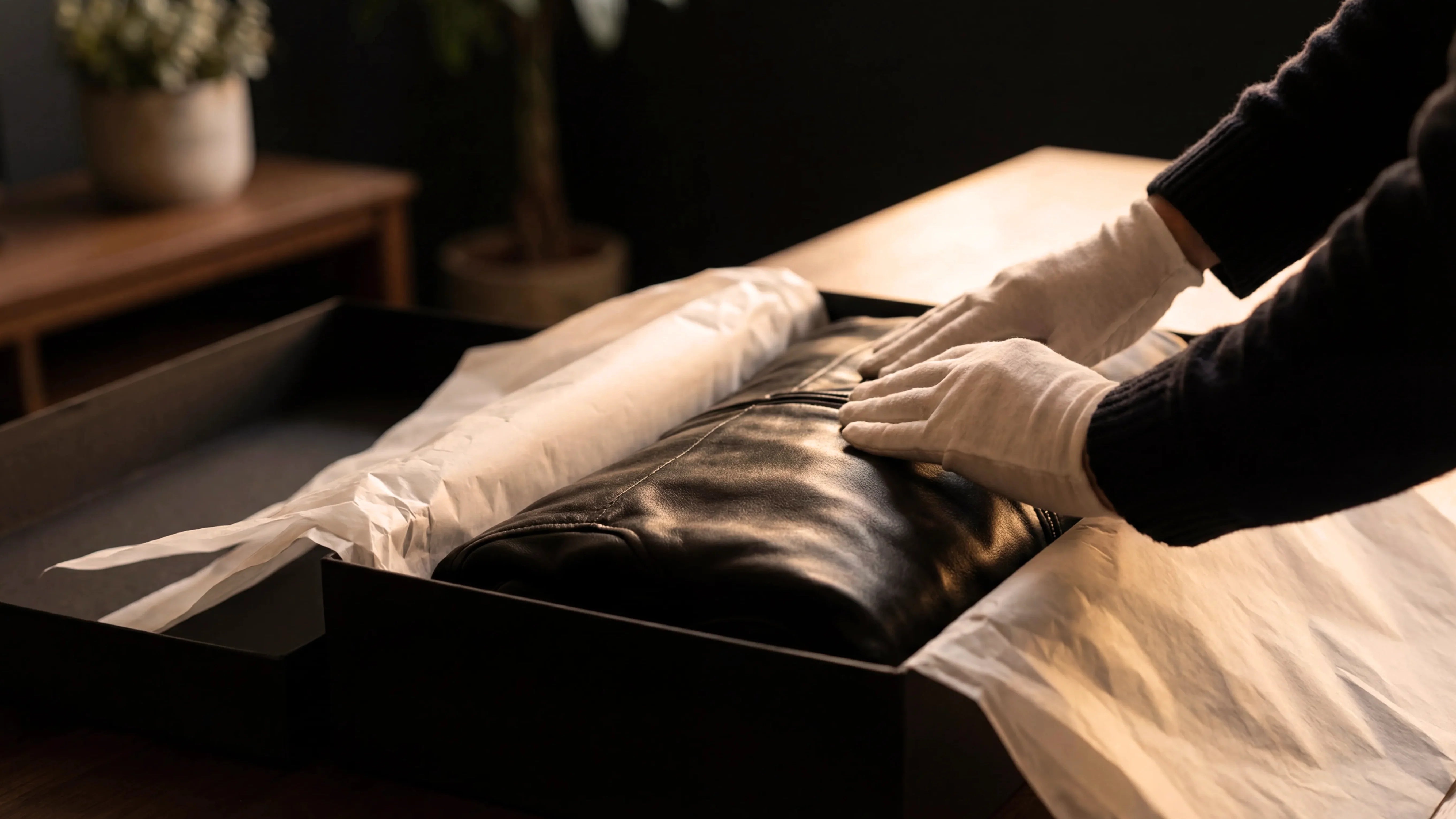
6. Approbation et livraison
Une fois que vous êtes entièrement satisfait de la pièce finale, votre veste est soigneusement emballée et expédiée, afin qu'elle vous parvienne en toute sécurité et exactement comme prévu.
Guide du constructeur personnalisé : Comment concevoir une veste ou un gilet de moto sur mesure
Construire un équipement de moto personnalisé semble excitant jusqu'à ce que vous soyez confronté à des dizaines d'options et que vous vous demandiez par où commencer. Type de cuir, couleurs des coutures, motifs matelassés, empiècements décoratifs, doublures, tout cela s'accumule rapidement.
Ce guide vous accompagne à travers chaque choix de notre configurateur personnalisé afin que vous sachiez exactement ce que vous sélectionnez et pourquoi c'est important. Que vous conceviez votre première pièce personnalisée ou votre cinquième, vous trouverez les informations nécessaires pour créer un équipement qui correspond à votre vision et à votre style de conduite.
Avant de cliquer sur "Commencer la conception"
Connaissez vos mesures
Un équipement personnalisé ne fonctionne que si l'ajustement est parfait. Mesurez avec précision votre poitrine, votre taille, vos épaules, la longueur de vos manches et la longueur de votre torse. Portez la chemise ou les couches que vous mettriez habituellement pour rouler lors de la prise de mesures. Si vous êtes entre deux tailles, notez que notre équipe peut ajuster les patrons en conséquence.
Ayez une vision (mais restez flexible)
Venez avec une idée de ce que vous voulez, comme la couleur, le style, l'ambiance, mais restez ouvert à des combinaisons que vous n'aviez pas envisagées. Parfois, les meilleures constructions proviennent de l'expérimentation avec l'outil de prévisualisation.
Budget pour la qualité
Les fabrications sur mesure coûtent plus cher que les équipements prêts à l'emploi car elles sont fabriquées spécifiquement pour vous. Comprenez que les cuirs de première qualité, le matelassage complexe et les fonctionnalités supplémentaires augmentent le prix. Vous payez pour l'artisanat, pas pour la production de masse.
Option par option : ce que chaque choix signifie
Matière supérieure et inférieure — Votre choix fondamental
Ce que cela signifie :
Il s'agit du cuir ou du tissu principal qui constitue le corps de votre veste ou de votre gilet. C'est la décision la plus importante dans votre conception personnalisée car elle détermine le poids, le niveau de protection, la durabilité et la façon dont votre équipement vieillit au fil des années de conduite.
Ce que cela couvre :
La matière supérieure couvre les principaux panneaux extérieurs, la poitrine, le dos, les épaules et les manches (sur les vestes). L'option de matière inférieure vous permet de choisir une matière différente pour les panneaux inférieurs ou les sections d'accentuation si vous concevez un modèle bicolore.
Ce que cela offre :
Cuir de vachette pleine fleur : Durabilité et résistance à l'abrasion maximales. Développe une riche patine avec l'âge. Idéal pour une protection sérieuse en conduite et une utilisation à long terme.
Cuir de vachette teint au tambour : La couleur pénètre dans toute la peau, de sorte que les bords et les points d'usure restent cohérents. Idéal si l'uniformité des couleurs et une esthétique propre sont importantes pour vous.
Cuir de buffle : Plus épais, plus texturé, visuellement distinct. Résiste aux conditions extrêmes et fait une déclaration audacieuse sur la route.
Peau d'agneau : Plus douce, plus légère, plus souple. Idéale pour les styles ajustés ou les motards privilégiant le confort et la facilité de mouvement plutôt qu'une protection robuste.
Denim, toile, maille, sergé : Alternatives en tissu respirant pour la conduite par temps chaud ou un style décontracté. Plus léger et plus abordable que les options en cuir.
Textures exotiques (Serpent, Dragon, Croc) : Cuirs gaufrés texturés qui ajoutent un intérêt visuel audacieux. Détails purement esthétiques, ce n'est pas de la vraie peau de reptile.
Couleurs des coutures — Petit détail, grand impact
Ce que cela signifie :
La couleur des coutures fait référence au fil utilisé pour coudre les coutures, les panneaux et les détails de construction de votre veste ou de votre gilet. Ce choix apparemment anodin a un impact visuel significatif sur l'aspect général de votre pièce sur mesure.
Ce que cela couvre :
Toutes les coutures visibles sur le vêtement, les coutures des épaules, les panneaux latéraux, la fixation des manches (sur les vestes), les fermetures avant, les bords des poches et toutes les surpiqûres matelassées ou décoratives que vous avez sélectionnées.
Ce que cela offre :
Des coutures assorties créent un aspect net et homogène où le cuir est la vedette. Des coutures contrastées font ressortir les coutures et ajoutent un caractère audacieux qui met en valeur les détails de construction.
Combinaisons populaires :
Fil blanc ou crème sur cuir noir (esthétique biker classique à fort contraste)
Fil orange ou rouge sur cuir marron (ambiance Americana vintage)
Fil noir sur cuir beige (look discret mais défini)
Tons assortis (finition élégante et professionnelle)
Quand assortir : Si vous voulez que le cuir soit la star et que le design reste propre et unifié, assortissez la couleur de votre fil à celle de votre cuir.
Quand contraster : Si vous voulez que les coutures ajoutent un détail visuel, du caractère et que les éléments de construction fassent partie de l'histoire du design, optez pour un fil contrastant.
Texture matelassée — Profondeur et dimension
Ce que cela signifie :
Le matelassage est une technique de couture qui crée des motifs en relief et rembourrés sur les panneaux de cuir. Il ajoute de la texture, de la structure et un intérêt visuel aux surfaces autrement plates tout en offrant un renfort subtil à ces zones.
Ce que cela couvre :
Vous pouvez appliquer le matelassage à des panneaux spécifiques tels que les épaules, le haut des manches, les panneaux latéraux, les empiècements ou les sections du bas du dos. Le placement du matelassage est personnalisable en fonction de vos préférences de conception, vous n'êtes pas obligé de matelasser l'ensemble du vêtement.
Ce que cela offre :
Matelassage en losanges : Motif classique et symétrique qui convient à tous les styles, du biker traditionnel au streetwear moderne.
Matelassage en carrés : Motif géométrique moderne qui donne un aspect structuré et contemporain.
Matelassage en nid d'abeille : Motif hexagonal unique, moins courant, accrocheur et distinctif.
Matelassage en lignes : Rangées parallèles linéaires et épurées populaires sur les styles café racer et d'inspiration vintage.
Meilleure pratique : Utilisez le matelassage stratégiquement sur une ou deux zones pour un impact visuel. Évitez de surmatelasser tous les panneaux, trop de texture peut sembler chargé et nuire au design général.
Accents — Rompre la couleur unie
Ce que cela signifie :
Les accents vous permettent d'attribuer différentes couleurs ou matériaux à des sections spécifiques de votre veste ou de votre gilet, créant un contraste et des ruptures visuelles qui ajoutent de la profondeur, des détails et une apparence personnalisée bicolore ou multicolore.
Ce que cela couvre :
Les options d'accent peuvent être appliquées aux cols, aux poignets, aux rabats de poche, aux brassards, aux panneaux d'épaule, aux détails de garniture ou à toute zone d'accent désignée dans l'interface du configurateur.
Ce que cela offre :
La possibilité de créer des combinaisons de couleurs distinctives qui mettent en valeur la structure de votre veste ou de votre gilet et rendent votre design vraiment unique :
Corps de veste noir avec col et rabats de poche marron
Gilet marron avec brassard beige et détails de garniture noirs
Panneaux bicolores qui suivent les lignes de construction du vêtement pour un look de course ou vintage personnalisé
Meilleure pratique : Limitez-vous à deux ou trois couleurs maximum sur l'ensemble de votre création. Au-delà, le design perd de sa focalisation visuelle et commence à paraître chaotique plutôt qu'intentionnel.
Doublure intérieure — Rendez-la personnelle
Ce que cela signifie :
La doublure est la couche de tissu intérieure de votre veste ou de votre gilet. C'est ce que vous voyez chaque fois que vous mettez ou enlevez votre équipement, et cela offre un espace pour exprimer votre personnalité sans affecter l'apparence extérieure.
Ce que cela couvre :
L'intérieur complet de votre veste ou de votre gilet, la poitrine, le dos et les manches (sur les vestes). La doublure se place contre vos sous-vêtements ou votre chemise lorsque vous portez le vêtement.
Ce que cela offre :
Couleurs unies : Simples et épurées. Assortissez ou contrastez avec votre cuir extérieur pour un look cohérent ou saisissant.
Motifs à carreaux : Designs classiques d'inspiration héritage qui fonctionnent particulièrement bien dans les rouges, les bleus, les noirs ou les tons terre.
Imprimés bandanas : Esthétique biker traditionnelle disponible dans plusieurs coloris, rouge, noir, bleu et plus.
Damier : Déclaration graphique audacieuse disponible en noir et blanc ou en variantes de couleurs.
Drapeaux nationaux : Montrez votre fierté et votre héritage avec des doublures à thème de drapeaux de divers pays.
Motifs camouflés : Camouflage forêt, désert ou urbain pour une touche tactique.
Téléchargement personnalisé : Utilisez votre propre œuvre d'art, le logo de votre club de motards, votre blason de famille ou votre design personnel pour un intérieur vraiment unique que personne d'autre n'aura.
Conseils pour les nouveaux utilisateurs du configurateur personnalisé
Commencez simple : Votre première création n'a pas besoin de toutes les fonctionnalités au maximum. Une base solide avec un ou deux détails remarquables est souvent plus belle qu'une surcharge d'options.
Utilisez l'outil de prévisualisation : Profitez de la prévisualisation visuelle en temps réel. Faites pivoter le design, modifiez les combinaisons et voyez ce qui fonctionne réellement avant de vous engager.
Pensez à long terme : Les tendances changent, mais les combinaisons classiques perdurent. Si vous voulez un équipement que vous porterez pendant des années, optez pour des choix intemporels plutôt que des détails à la mode.
Posez des questions : Vous ne savez pas quel cuir convient le mieux à votre style de conduite ? Vous vous demandez si une certaine combinaison sera esthétique ? Appelez le (800)-537-3030. Notre équipe a conçu des milliers de pièces sur mesure, nous pouvons vous guider.
N'oubliez pas que l'ajustement est primordial : Le design le plus cool du monde n'aura pas d'importance si l'ajustement n'est pas parfait pour vous. Veuillez vérifier vos mesures et votre taille avant de finaliser votre commande.
Foire aux questions sur les consultations personnalisées
Commencez avec du cuir de vache pleine fleur pour la durabilité ou du cuir de vache teint en fût pour l'uniformité des couleurs. Ce sont deux matériaux éprouvés qui conviennent à la plupart des motards et des styles de conduite.
Nous n'offrons pas de kits d'échantillons, mais notre outil d'aperçu fournit une représentation précise des couleurs et des textures. Si vous avez des doutes, appelez notre équipe, nous pourrons vous décrire les matériaux en détail en fonction de vos besoins.
Modifiez-le. L'outil de prévisualisation est là pour que vous puissiez expérimenter sans risque. Essayez différentes combinaisons jusqu'à ce que vous trouviez ce qui convient. Il n'y a pas de limite au nombre de variantes que vous pouvez tester.
Utilisez l'outil d'aperçu pour comparer. Si vous hésitez entre deux options, les coutures contrastantes font ressortir les coutures ; les coutures assorties gardent le focus sur le cuir lui-même.
Oui, mais avec modération. Mélanger une zone matelassée (comme les épaules) avec des panneaux lisses fonctionne bien. Par contre, mélanger plusieurs motifs de matelassage sur une seule pièce peut paraître chaotique.
Seulement si vous avez une vision claire. Les accents ajoutent des détails, mais une construction simple et monochrome est souvent plus nette qu'un design multi-tons mal planifié. Commencez simplement, puis expérimentez sur de futures constructions.
Les couleurs unies et les carreaux sont des classiques. Les imprimés bandanas sont populaires auprès des cavaliers traditionnels. Les téléchargements personnalisés gagnent en popularité auprès des membres de clubs et des cavaliers souhaitant une personnalisation unique.
Une fois votre commande soumise et la production lancée, aucune modification n'est possible. Vérifiez tout attentivement pendant la phase de conception : les matériaux, les couleurs, les tailles, tout.
Notre équipe examine toutes les images personnalisées avant la production. Si la résolution est trop faible ou si l'image ne peut pas être imprimée clairement, nous vous contacterons pour demander un fichier de meilleure qualité ou discuter d'autres options.
Des questions ?
Si nous n'avons toujours pas répondu à votre question, vous pouvez nous contacter ci-dessous et nous vous répondrons dès que possible.